October 16, 2026
Loading...
Published by Aeyan Raza
December 7, 2025
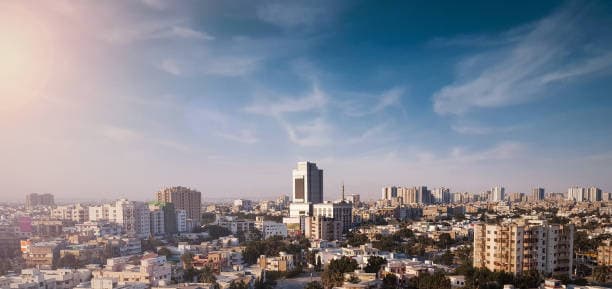
A major shift in how cities are measured has placed Karachi firmly in the global spotlight, exposing both its true scale and its long-ignored challenges.
The latest United Nations World Urbanization Prospects 2025 (WUP 2025) has rewritten the rules for defining cities. Instead of relying on outdated administrative boundaries set by local governments, the UN now uses satellite imagery, continuous built-up land, and population density to measure urban areas.
The results are striking. Jakarta has overtaken Tokyo as the world’s largest urban agglomeration, and nearly 45 percent of the world’s population now lives in cities, up from just 20 percent in 1950. For Pakistan’s largest city, Karachi, this new method delivers long-overdue recognition and an uncomfortable truth.
Under older measurement systems, Karachi’s actual footprint was consistently underestimated. Administrative borders failed to capture its sprawling informal settlements, dense housing clusters, and continuous outward expansion driven by migration.
The new UN data shows Karachi as a single, unbroken urban mass one of the world’s largest and fastest-growing metropolitan regions. Its population density, economic output, and land use patterns now place it firmly among global megacities.
This matters because planning, funding, and governance decisions have long treated Karachi like a much smaller city.
Despite its size, Karachi is still governed through fragmented municipal systems, overlapping authorities, and chronically weak financial structures. Infrastructure from public transport and water supply to waste management and drainage has failed to keep pace with growth.
The UN report highlights a dangerous mismatch: Karachi functions as a hyper-dense economic engine, but is managed like a mid-sized city.
As a result, millions of residents face daily risks from flooding, heatwaves, housing shortages, and transport breakdowns. Climate threats only amplify these vulnerabilities in a city already stretched beyond its limits.
Urban experts say the WUP 2025 findings remove any remaining debate about Karachi’s status. The city now clearly requires:
1. Metropolitan-wide governance instead of fragmented control
2. Climate-resilient infrastructure and drainage systems
3. Affordable housing for low- and middle-income residents
4. Modern mass transit to reduce congestion and emissions
5. Stronger fiscal autonomy for local governments
Without these changes, Karachi’s problems will continue to multiply at a cost not just to the city, but to Pakistan’s economy as a whole.
The UN has effectively held up a mirror to Karachi, showing the city as it truly is. The data is clear, objective, and impossible to dismiss.
Karachi is no longer an “emerging” megacity it is already one. The only question now is whether Pakistan’s policymakers are ready to govern it like one.